
Your ServiceTitan report says your call center has a 91% booking rate. That’s great, right? Then why are there still empty spots on your dispatch board? If you trust that 91% without checking what went into it, you could spend thousands getting more calls while missing jobs from the calls you’re already receiving.
Your marketing manager thinks you need more leads. Your call center manager says the CSRs are doing a good job. Your service manager thinks the technicians should be bringing in more revenue. Everyone has numbers to support their opinion, but you still have to decide where to spend your money.
How do you know who’s right?
Your Numbers Can Be Right and Still Mislead You
ServiceTitan collects a lot of useful information about your business. But a number can be correct and still give you the wrong impression.
Take booking rate. ServiceTitan calculates it using calls marked as leads. Calls marked No Lead or Excused aren’t included. If a call that should have been booked gets marked No Lead, it won’t hurt your reported booking rate.
You could have a 91% booking rate and still be missing jobs. We’ve written about this before in A KPI May Be Your Call Center’s Silent Killer.
Even when your reports are right, you can get the wrong picture if you don’t see how the numbers fit together. The problem isn’t necessarily ServiceTitan or your CSRs. It’s that you may be making decisions without knowing what’s behind the numbers.
Where Are You Losing Jobs Between the First Call and Revenue?
Think about everything that happens before a phone call turns into money.
Marketing brings in the lead. Someone answers the phone and decides whether it’s a real opportunity. A CSR books the appointment. Dispatch sends a technician, who has to turn that visit into work the customer agrees to pay for.
When something goes wrong along the way, you lose a chance to earn revenue. But if you’re only looking at the final sales number, you may not know where the trouble started.
You might spend more on advertising when the better opportunity is getting more jobs from the calls you already receive. That’s why looking at one report at a time can lead you in the wrong direction.
Eight Letter Grades Show You Where to Look First
We all understand letter grades. An A means you’re doing well. A C tells you there’s room to improve, and an F deserves a closer look.
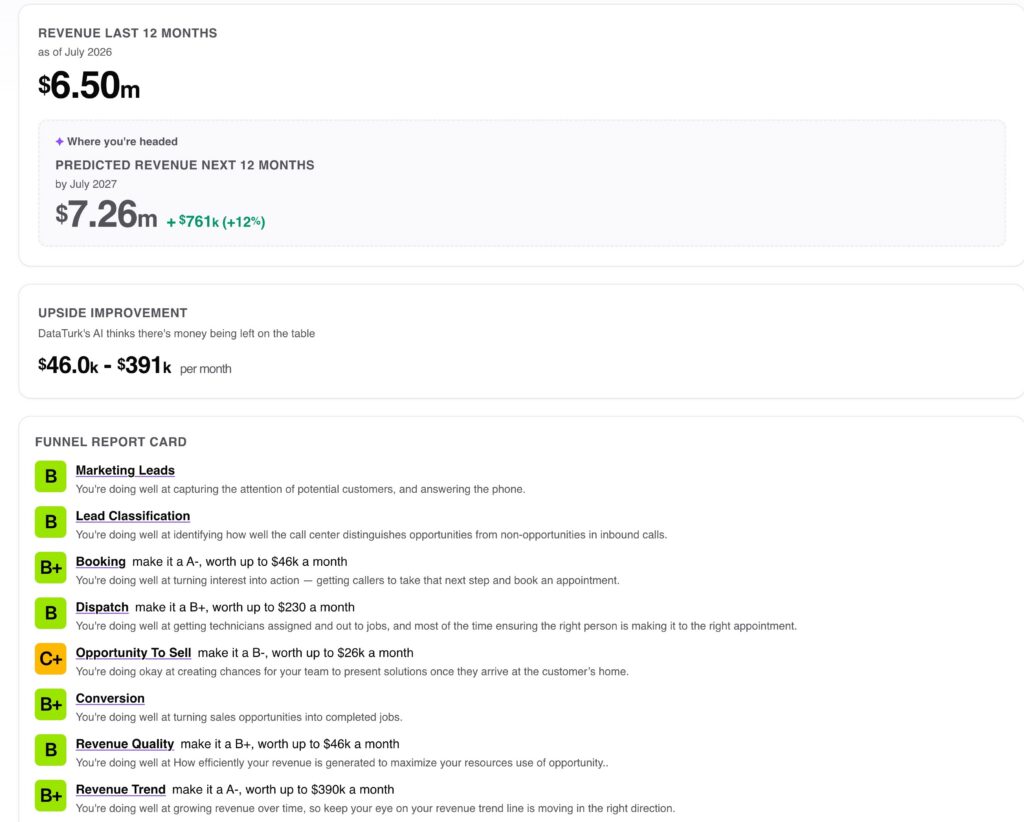
That’s why we built UpScore. It uses your ServiceTitan data to give your business letter grades in eight areas, from the first lead through to revenue.
Each grade covers a different step from the first call to revenue. A problem at one step can affect everything that follows. Seeing all eight grades together helps you spot where you’re losing opportunities without digging through dozens of reports.
But the lowest grade isn’t always the best place to start. UpScore also estimates what improving each area could be worth, so you can compare opportunities before deciding what to fix.
Don’t Trust a Grade Until You Can See What’s Behind It
A report card helps, but you wouldn’t want to make an important business decision based on a grade you can’t explain.
If UpScore gives booking a C, you can look at the numbers behind it to understand why. You can see what was measured, how it was calculated, and how the results have changed.
A number you can’t check is a claim. You should never have to take an important number on faith when deciding where to spend your money.
Find Out Where Your Next Revenue Opportunity May Be Hiding
You already have plenty of numbers in ServiceTitan. What you need is an easier way to understand them and decide where to spend your time and money.
UpScore gives you a monthly report card showing how your business is doing from call to revenue. It helps you find areas worth improving, see what those improvements could be worth, and check the numbers behind the grades.
Your team still has to do the work. But knowing where to focus helps you get more from the people, time, and money you already have.
Watch the two-minute UpScore demo and see what your ServiceTitan numbers may be trying to tell you.


