Your sales manager looks at $500,000 in open estimates on Monday. By Friday, the report still shows $500,000, even though your chances of winning that work may have fallen dramatically.
Every experienced home service owner knows that following up quickly matters. But how quickly do those opportunities lose their value?
At DataTurk, we spend considerable time studying revenue trends, revenue quality, and predicting future revenue. That work led us to analyze more than 375,000 estimates across a range of multi-line home service companies.
What we found confirms what good owners have been saying for years, although the speed of the decline might surprise you.
Your Best Chance May Be Gone Tomorrow
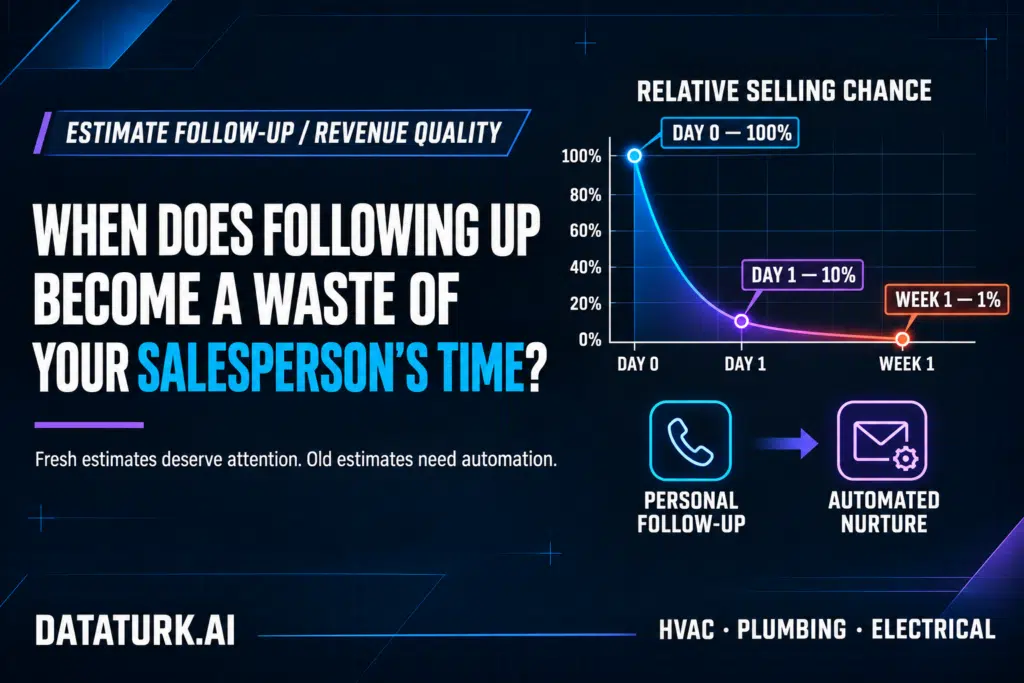
At a typical company in our study, nearly all estimates that eventually sold did so on the day they were written.
By the next morning, an unsigned estimate had lost roughly 90% of its original chance of selling. After a week, its chance of selling during the following months we tracked was about 1%.
These are estimate-level figures, since one job can have multiple estimates.
The timing varied among trades, too. Some closed almost everything within hours, while others continued winning a meaningful share of sales a week or more later; seasonality had a minor impact.
Your company’s sales history can tell you when your customers tend to buy and help you decide where your salespeople should spend their time.
Stop Chasing. Never Stop Nurturing.
The lesson isn’t to abandon old estimates. It’s to change how you follow up.
Billy Cline of YourNewDoor.com often shares examples with his Facebook followers of sales closing as late as 1,000 days after the original estimate. He uses automated text and email to follow up and nurture the proposal.
Those sales matter, but you can’t predict which customers will come back or when.
Give fresh estimates your strongest personal follow-up. As their chances of closing decline, move them into an inexpensive automated nurture campaign that stays in touch until customers buy, decline the estimate, or ask you to stop contacting them.
Our research shows when customers bought, not whether follow-up caused them to buy. It also doesn’t establish the perfect day to switch from personal calls to automated nurturing. That depends on your company’s customers, job values, and follow-up costs.
What Is Your Open Pipeline Really Worth?
Knowing how much work you’ve quoted is useful. Knowing how much you’re likely to win is far more valuable.
That’s why DataTurk’s UpScore looks beyond revenue totals, grading areas such as Revenue Quality and Revenue Trend to help owners understand their business.
Your open estimates already contain clues about when customers buy and how you should allocate your salespeople’s time.
The question isn’t how long you should keep following up. It’s how long each estimate deserves your salesperson’s personal attention.